A Postcard from… is where I record the truth about being an artist. My practice varies from day to month, so I wanted a way to capture the creative journey in words instead of a sketchbook: insights and tips from the studio, honest tales from home life, and answers to the question people always ask me — what do artists actually do all day?
I’ll be sharing the same bits of art history I love talking through with my students, plus a bit of my own story along the way: my early years in London, and how I’ve managed motherhood alongside my practice.
Have a read, and if you’d like these dropped into your inbox once a month too, along with first word on exhibitions, courses and other happenings, you can sign up below.
Why Bloomsbury? My connection to the group
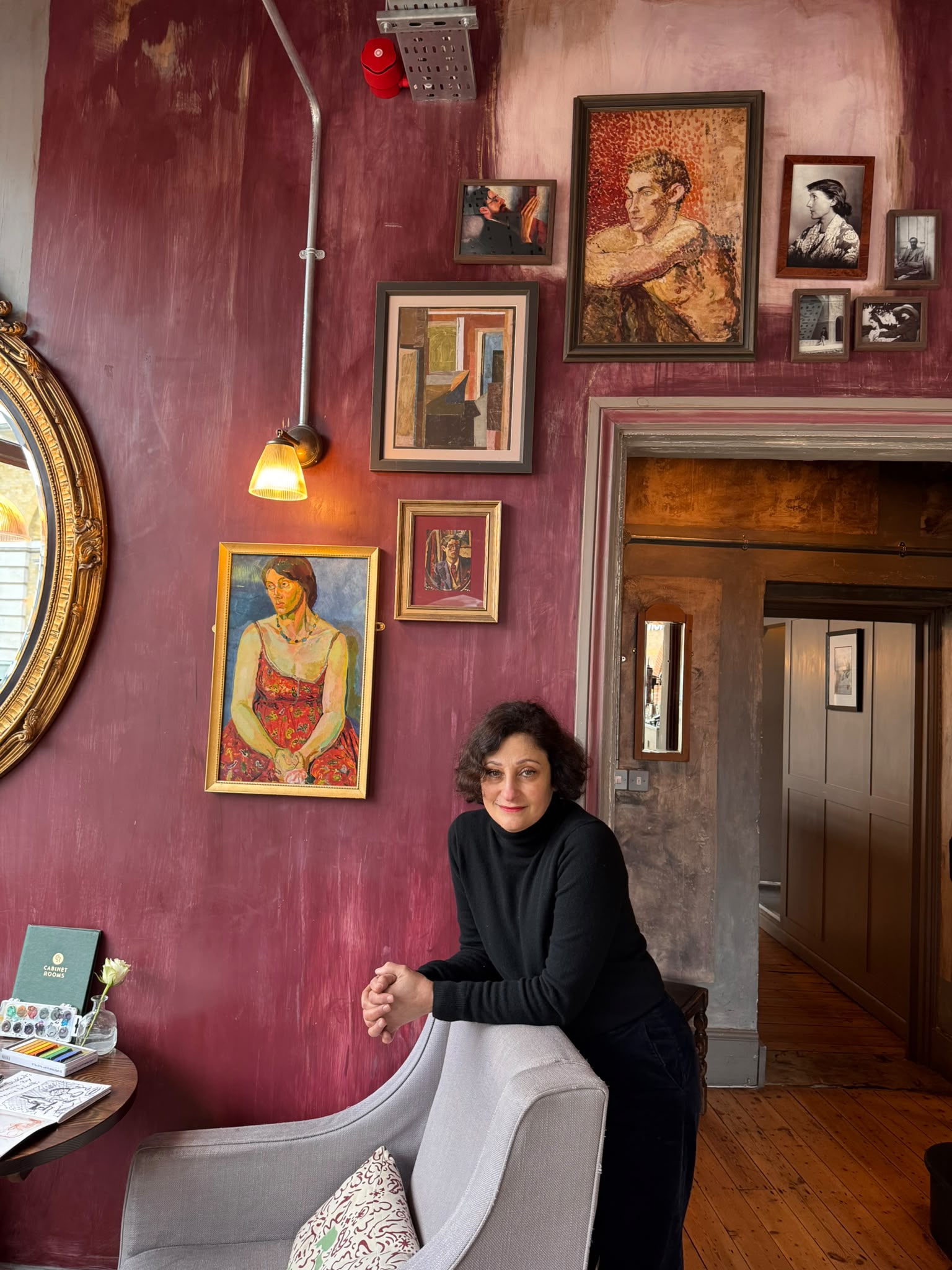
If you follow me on Instagram you may have seen a lovely reel I made that captures some of the joy and fun we have on the Bloomsbury inspired Four Day Art course. The course takes place in the depths of our lovely garden, studios and teaching space and it is a warm place to share and be free from the outside world, to make and create around the stories of the legendary Bloomsbury group. Every year the art course gets more in-depth and rich in experience. I like to start it at the Cabinet Rooms with coffee, croissants and a talk with a presentation to set the scene, context for the Bloomsbury main protagonists. Coffee, croissants and sketchbooks: The Bloomsbury course always begins at the Cabinet Rooms in Winchester. Why start at the Cabinet Rooms: It is Winchester's own Bloomsbury café with its Charleston house inspired interiors, cocktails and cinema/presentation room. Gary and Marcus are the fabulous duo who have created this haven for all - away from the 9-5 and escape into another time and place. It's my bit of Paris and I love it so it's why I start here. Marcus shares my passion for the group, its stories and art so he helps me organise the Charleston House trip to Lewes. In preparing for the course , every year I reference and gather more and more resources. If you don't know Virginia Woolf the great modernist writer of our time was Vanessa Bells sister. This year I found a number of quotes from Woolf's "Oh to be a painter" and I whould like to share this one with you. It's from the forward to one of Vanessa Bell's Catalogues, on the importance of painting. It's so evocative and makes you want to paint
THE SCOTTISH COLOURISTS TALK
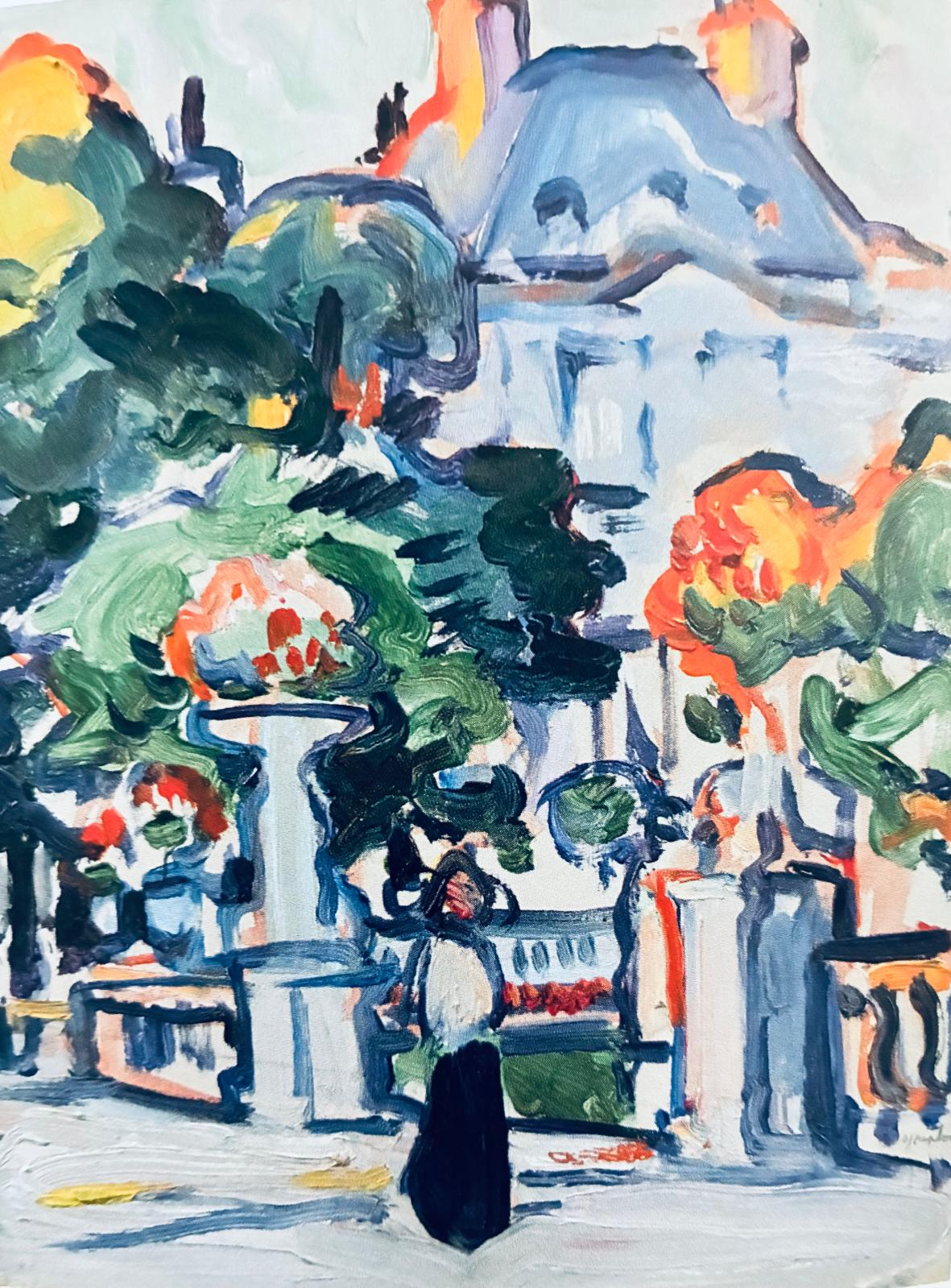
I recently gave a talk on the Scottish Colourists at The Arc, Winchester, as part of the Radical Perspectives exhibition — four artists who have influenced me heavily over the years: Samuel John Peploe, Francis Cadell, Leslie Hunter and John Duncan Fergusson, all working in the early twentieth century. Their influence, alongside the Bloomsbury Group, runs through my art classes at The Colour Factory, where we look at the historical context, the art, the artists' stories, and the process behind the making. The talk came about almost by accident. Over a year ago, Kirsty Rodda, curator at The Arc, came to visit The Colour Factory to talk through ideas for upcoming shows. She suggested an exhibition of famous artists and their dogs - "because everyone in Winchester loves dogs." I said, what about the Scottish Colourists! And I'll do a talk! My student said “this show was made for you Rosie”. And of course I knew I would provide a better teaching experience for my students by having the art we have studied in our local gallery. JD Fergusson (1874 - 1961) Jonquils and Silver. 1905. Oil on canvas SJ Peploe (1871 -1935) Luxembourg Gardens c 1910 Oil on Panel The Scottish colourists were all born in Scotland but they did most of their training in the Academy Julian in Paris and worked alongside fellow artists in the South of France with the post impressionists and the Fauve artists. So they were heavily influenced by the artists whose paintings were referred to as being by “wilde beasts” because of the vivacious and bold mark making. Their paintings prior to this period were flat, cool and grey reflecting the Glasgow School of art tradition and the city around them. When they returned to Scotland they brought colour
THE ARC INTERVIEW
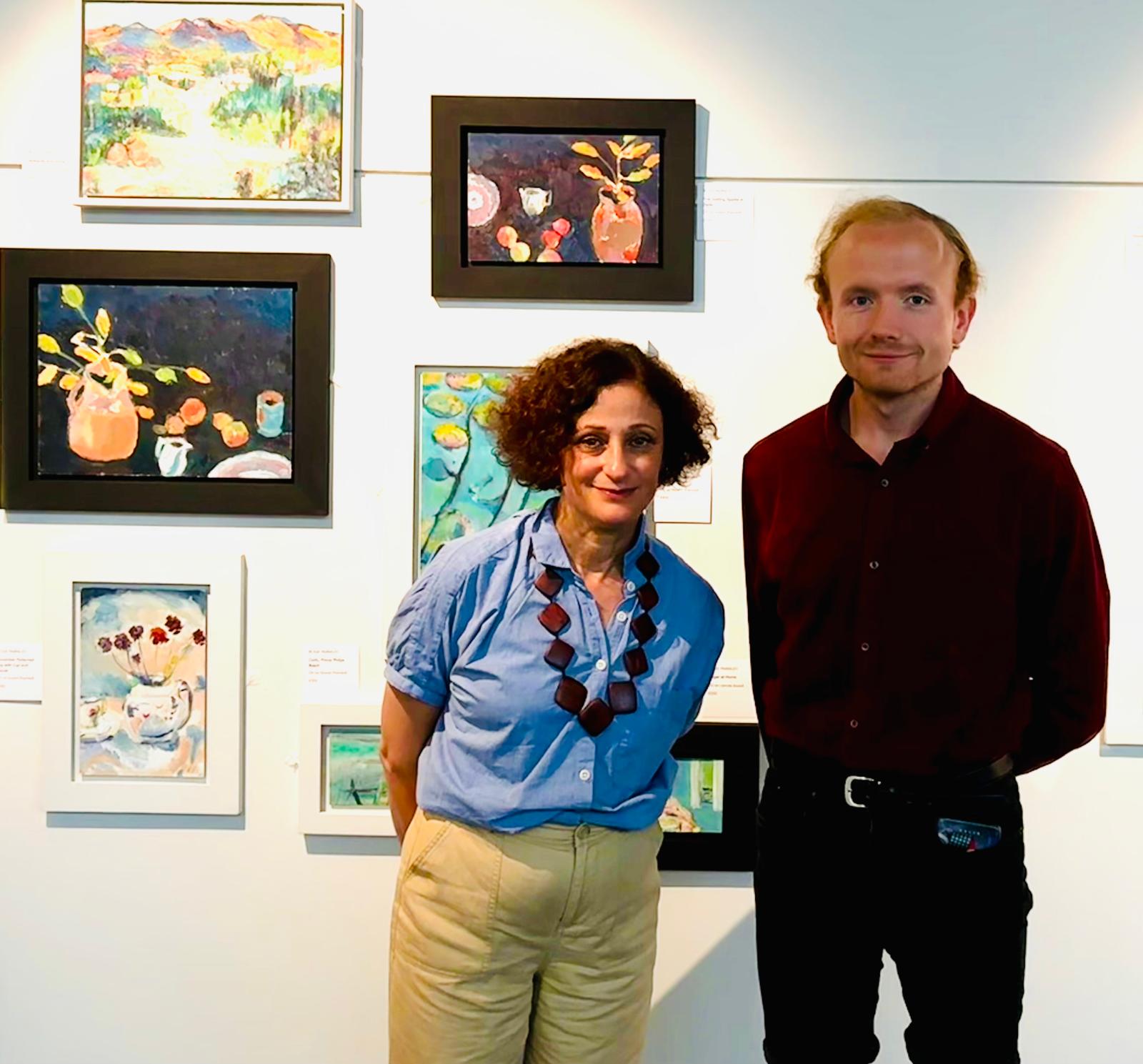
John Reed came to the studio at The Colour Factory, and over a coffee we talked about why I do what I do — my practice, and why painting matters to me. He took lots of photographs as part of promoting the exhibition at The Arc. John interviewed all of the Colour Factory artists — he's one of the assistant curators at The Arc, and he helped hang our work for the show. Rosie Parmley and John Reed My work is part of The Everyday at The Arc, Winchester, running alongside the Scottish Colourists exhibition, Radical Perspectives. Hanging the show One of the most fascinating parts of the whole experience was the hanging of the work itself. Putting on a show is hard work — when Emily and I hung our more intimate exhibition in Oxford by ourselves, with less to hang, it still took us two days. But at The Arc, our paintings each had their own cushion and had three lovely professional helpers to handle the art. They were brilliant and Emily and I enjoyed the experience so much - hanging will never be the same again. The standard was high! They said they'd never worked with anyone so organised — we'd made a scale paper model of exactly how the paintings should be hung, to exact measurements. Most of it went up on the first day, with five artists' work hung in a day and a half. The view from my studio In the interview, I talked about the view from my studio, looking out onto the old river park building, abandoned for twelve years now. It made me think of Vanessa Bell, who painted the view from her own window. We both had pots on our windowsills too, a lovely parallel between her painting
Home: North Kensington and Grenfell Tower Fire
In my search for home, I'm interested in painting the places that exist in our minds and discussing the disparity in then and now. This has led to me reflecting on the places I have lived and called my home and those places that are distant callings. Me and my besties called it The Grove ie Ladbroke Grove in North Kensington. This is where I raised my babies, made lifelong friends and where I had my first art studio at ACAVA on Latimer Road. I also taught at the local primary school that my kids attended - Oxford Gardens. We loved the area and its community. If you don't know North Kensington it's the poor part of the Royal borough of Kensington and Chelsea. It has a brilliantly diverse community, where the rich and poor sit by side and where over 80 languages are spoken. It's a vibrant mix that attracts tourists and revellers to Europe largest street festival - Nottinghill Carnival on the August bank holiday every year. The carnival route is all around Ladbroke Grove and Westbourne Park but its' called the Nottinghill Carnvial. We lived down the road from the Grenfell Tower that sits among a group of blocks along the Westway motorway. My kids and I went to Maxilla Nursery Centre that was a community led project funded by the ILEA. Maxilla sat under the Westway. It offered free nursery places, a drop-in play centre and it was my first port of call and a lifeline for many parents through its Sure-start scheme. It had slides, sand pits, a vegetable plot, fruit trees – a wonderful rare oasis under the Westway. I remember going on a march with the kids, up to the Council offices with banners saying "Save our nursery". The governments austerity cuts put